
A digital Christmas card feels personal when it could only have been made for one person. That comes down to three things: photos that hold shared memories, words written specifically to them, and sending it at a moment when they can actually take it in. Design and effects matter much less than most people think.
Why do so many digital cards feel generic?
Digital cards are easy to send, and that is part of the problem. A forwarded animation or a template with a name dropped in takes a few seconds, and the person receiving it can tell. It is not that digital is less sincere than paper. It is that a card with nothing specific in it, in any format, says "I remembered the date" rather than "I remembered you".
The good news is that the fix is not complicated. It mostly takes a little time and honesty.
Choose photos for the memory, not the picture
The photos that mean the most are rarely the most polished. A blurry shot from a late night, a photo of a meal you both remember, or a picture of the view from a place you once stayed can carry more feeling than a perfect portrait.
When choosing, ask yourself:
- Would they recognise this moment straight away?
- Is there a small story behind it that I can tell in a sentence or two?
- Does the set include ordinary days as well as big occasions?
Keep the selection small. A dozen well-chosen photos, each with a line about why it is there, will be looked at more closely than an album of a hundred.
Write something only you could write
Small details beat big words
"You mean so much to me" is true, but it could be from anyone. "I still think about the way you ran back for my scarf at the station" could only be from you. Specific memories, inside jokes and small observations make a message personal far more reliably than grand phrasing.
Add a proper letter
Captions on photos are a good start, but a real letter at the end gives the card weight. It doesn't need to be long. A few paragraphs that say what this year has been like, what you are grateful for and what you are looking forward to are enough. If you would like help getting started, our guide on turning photos into a Christmas card for their phone includes a few example openings.
Write it in your own voice
Write the way you talk. If you would never say "season's greetings" out loud, leave it out. The person reading should be able to hear you.
Timing is part of the gift
When a card arrives changes how it is received.
- Avoid the busiest moments. A message that arrives in the middle of a family lunch gets a quick glance. One that arrives on a quiet evening gets read properly.
- Think about time zones. If they are far away, work out when it will be morning or evening for them.
- Send it to them, not to a group. A card in a group chat feels like an announcement. A direct message feels like a gift.
- Give a little heads-up. A line like "I made you something, open it when you have a few minutes to yourself" sets the tone.
There is no single right day. Some people like to send on Christmas Eve, others on the morning itself, and for someone who will be busy with family, a few days early can be kinder.
Keep it private
Part of what makes a card personal is knowing it was meant for you alone. Things you would write to one person, you might not want anyone else to read. Choose a format where only they can see it, and be careful about anything that could be forwarded or opened by others.
Where Dear Room fits
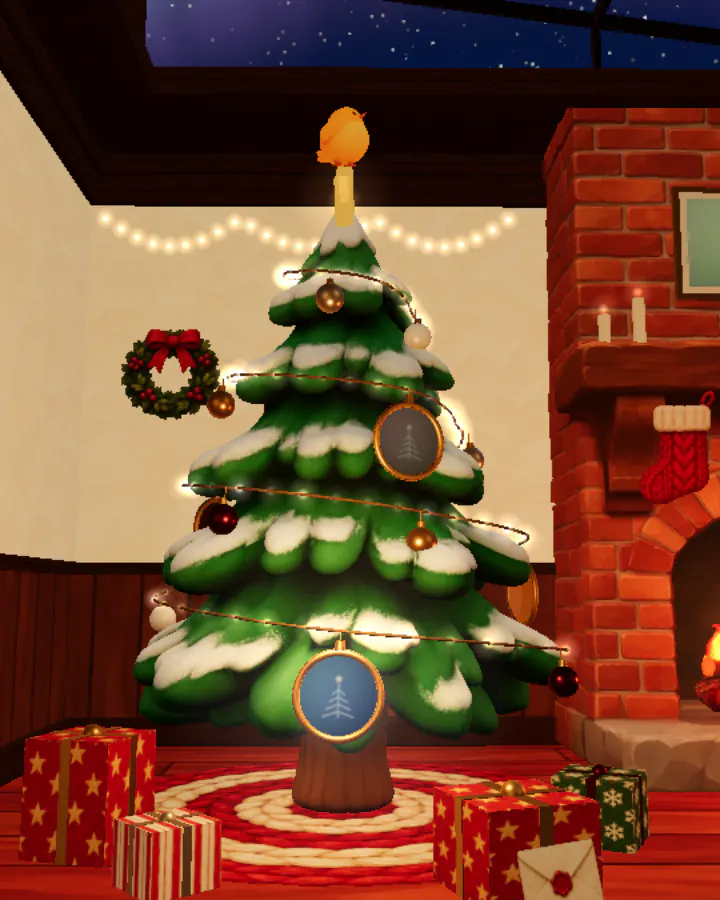
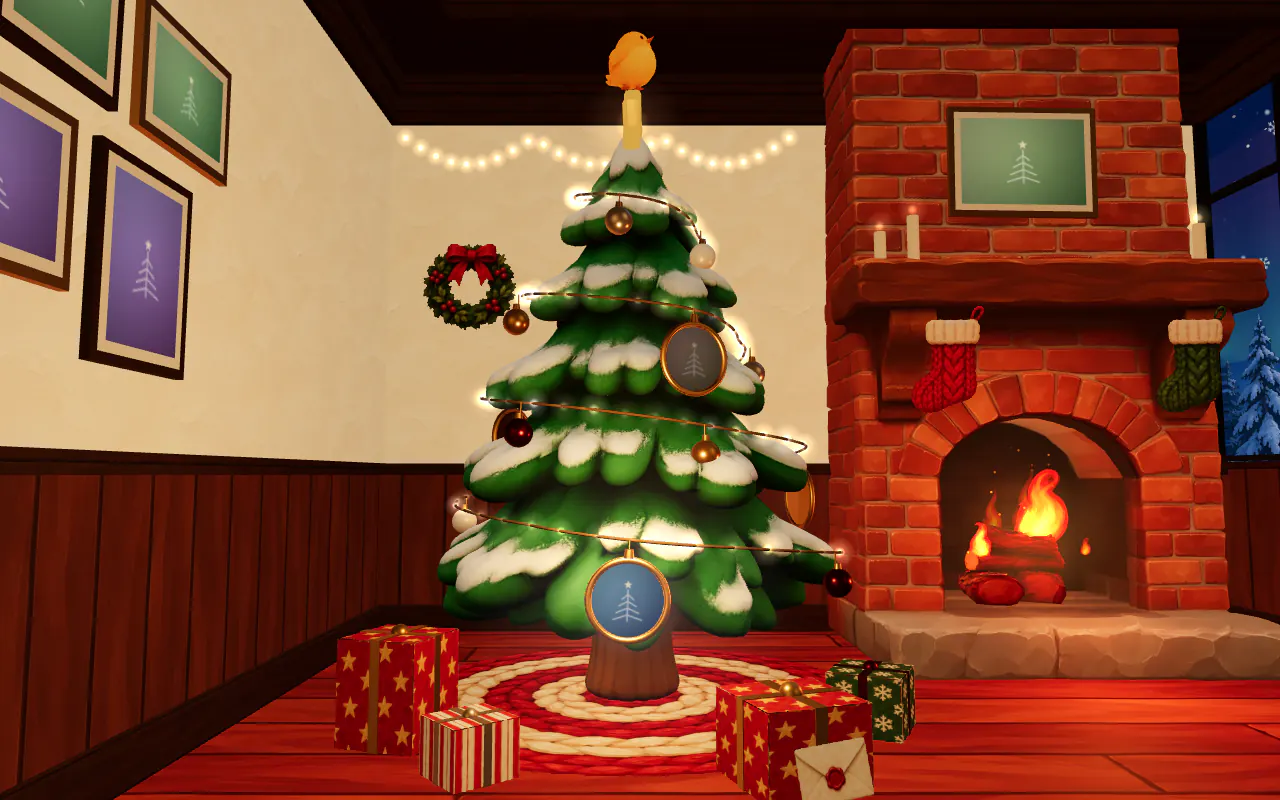
Dear Room is one way to put these ideas together. It is a small private 3D Christmas room that opens in the browser, where your photos hang as ornaments on a tree, each with a date, a title and a short message, and a letter waits as the last gift under the tree. You can add framed pictures and hide small notes in the stocking by the fireplace or on the windowsill.
The room opens with a password you choose, ideally a short phrase only the two of you know. Just remember that the question and hint on the door can be seen by anyone who has the link, so keep them free of private details. Photos are stored privately with no public links, the room opens only with both the link and the password, and rooms are hidden from search engines. You send the link yourself, whenever the moment feels right. The Dear Room questions page has more practical details.
A quick checklist before you send
- I chose photos for the memories behind them, not just how they look.
- Each photo has at least a line explaining why it is there.
- The set includes ordinary days, not only big occasions.
- I wrote a letter in my own voice, with at least one specific memory.
- I said something I don't usually say out loud.
- I read it through once more, out loud if possible.
- I know when they will have a quiet moment to open it, in their time zone.
- I am sending it directly to them, with a short note about what it is.
- Only they can open it, and nothing private is visible to anyone else.
- I kept my own copies of the photos and the letter.
A personal card doesn't need to be elaborate, only specific and sincere. If you would like a place to bring it all together, you can create a private Christmas room with Dear Room and send it when you are ready.